
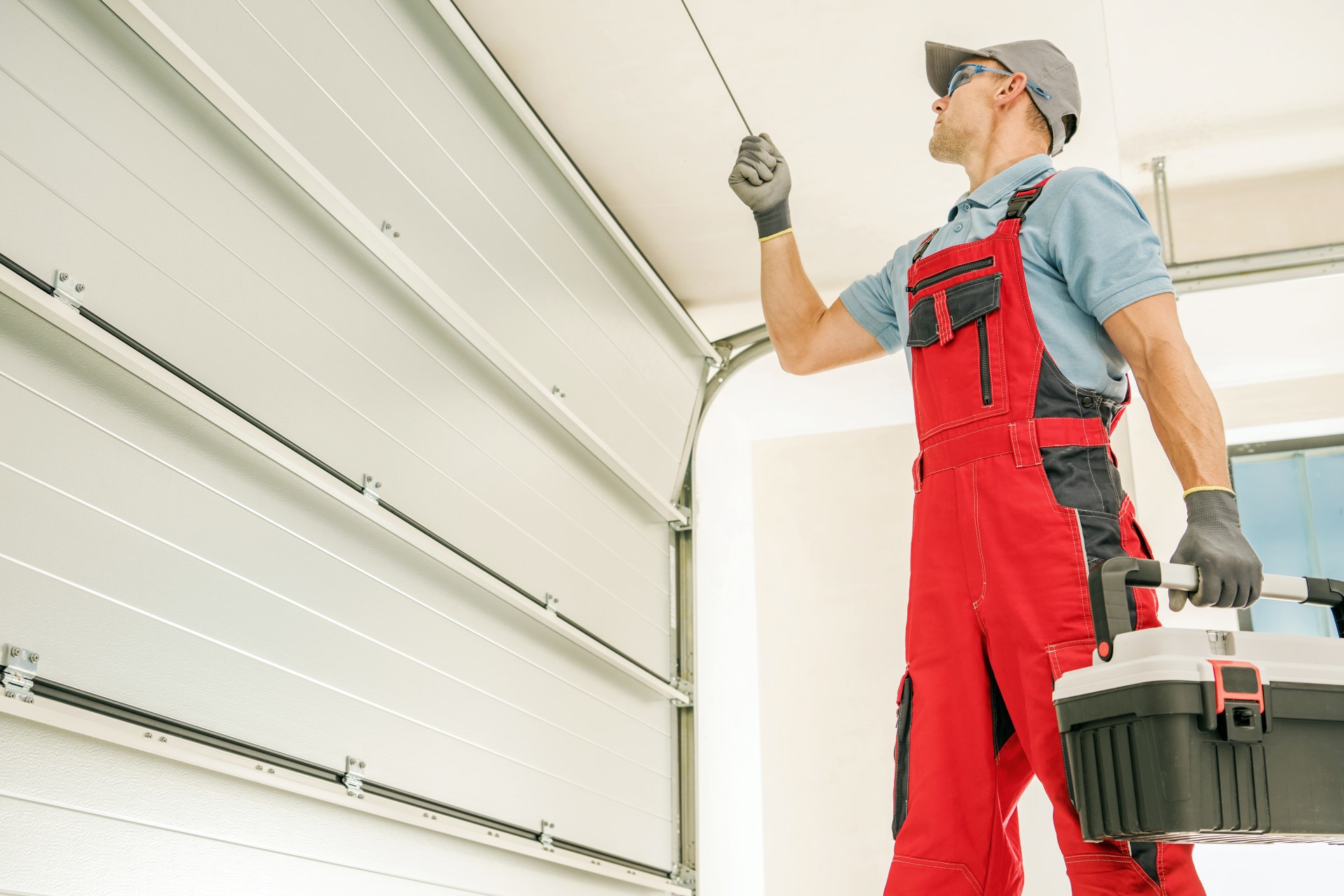
Your Fall Garage Door Tune-Up: 7 Checks Before Winter
Cold Weather Finds Every Weak Point
Your garage door is the largest moving object on your house. It weighs somewhere between 150 and 400 pounds, it goes up and down a few thousand times a year, and most of us never think about it until the morning it refuses to move. In Northwest Arkansas, that morning is almost always in December or January.
There is a reason for that. Cold thickens the grease in your rollers and hinges. Steel contracts. A spring that was already fatigued in October gives up in January. Nothing about winter causes a garage door to fail on its own — it just finds the parts that were already worn and finishes them off. Forty-five minutes of attention this fall is what keeps you from standing in a cold driveway with a car you can't get out.
Get a Free Estimate!
Seven Things Worth Checking Before It Gets Cold
Some of these you can do yourself on a Saturday morning with a flashlight and a stepladder. Some of them you should not touch — and we will be clear about which is which. Jump to whichever part you are worried about.
The Part That Does All the Heavy Lifting
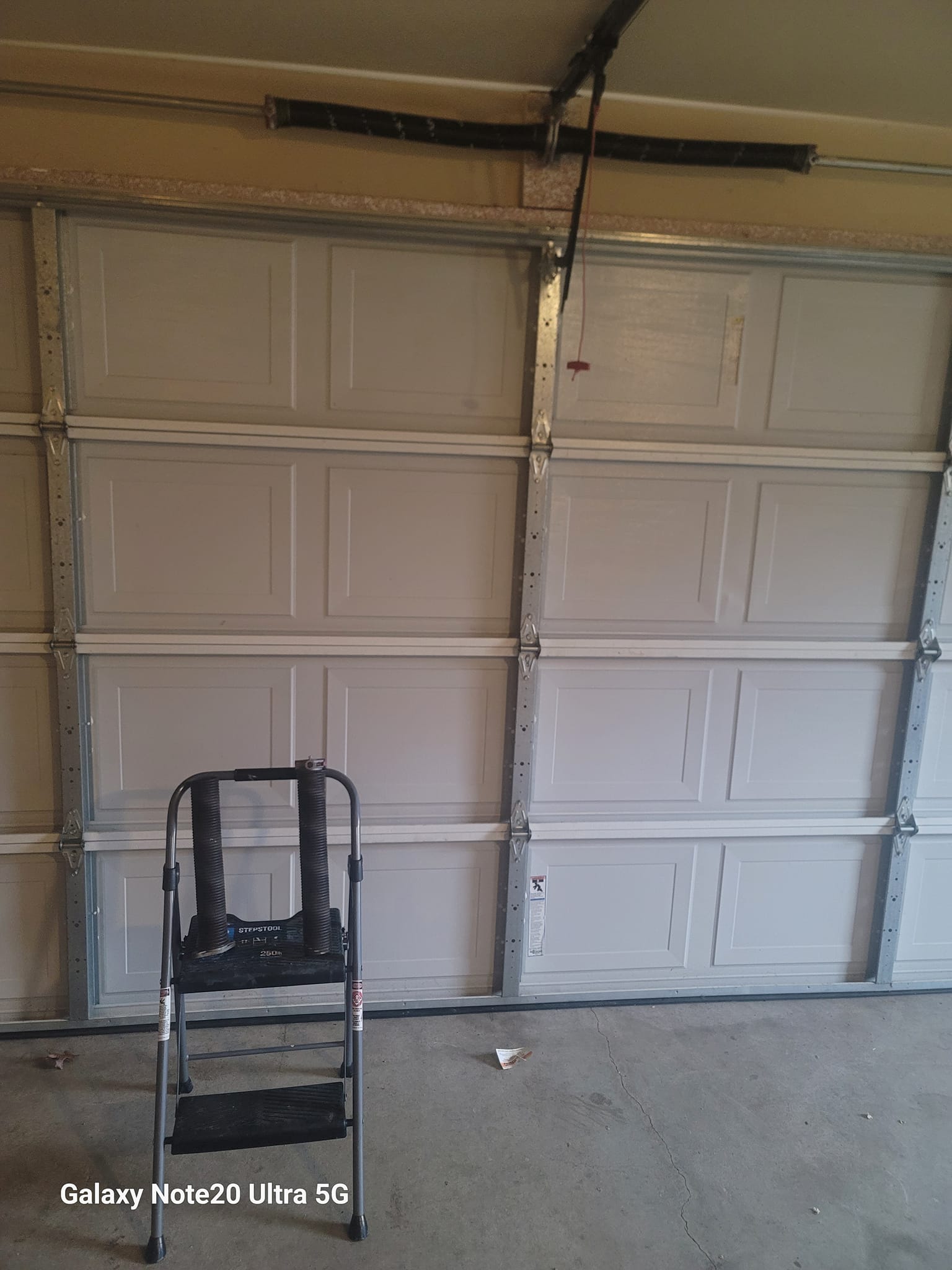
Your opener does not lift the door. The springs do. The opener just guides a balanced door up and down, which is why a healthy door can be lifted by hand with one arm. Torsion springs are rated for a set number of cycles — commonly ten thousand — and a busy family door burns through those faster than most people expect. Look for gaps in the coil, rust, or a spring that looks stretched compared to its twin. On the cables, look for fraying near the bottom bracket, where they take the most abuse.
Here is the part we will not soften: do not adjust, loosen, or replace a torsion spring yourself. They hold enormous stored energy and they injure people every year. Checking them is fine. Touching them is a job for someone with the right winding bars and the insurance to back it up. If yours look tired, that is exactly what our garage door repair service in Bentonville is for.
Where Cold Weather Shows Up First
This is the friendliest part of the checklist, because most of it is just cleaning and lubricating. Run a rag down both tracks to clear out the grit, cobwebs, and dead leaves that collect over a summer. Check that the track is not dented or bowed — a garage door that binds halfway up is usually fighting a bent track, not a bad opener. Spin each roller with your fingers. If one is chipped, wobbling, or refuses to turn, it is dragging instead of rolling, and that drag lands on your springs and opener.
Then go around with a socket wrench and snug up the hinge bolts and bracket hardware. A door that shakes and bangs its way up has usually just worked itself loose over a few thousand cycles. Finish with a garage-door-specific lubricant on the rollers, hinges, and springs — not WD-40, which strips lubricant rather than adding it, and not grease on the tracks, which turns into a dirt magnet. If your door has been making noises you cannot place, our guide to common reasons a garage door won't open walks through what each sound usually means.
Stop Heating Your Driveway
Close the door and stand inside with the lights off. If you can see daylight along the bottom or up the sides, you have found where your winter heat is going — along with the leaves, the rain, and eventually the mice. The bottom gasket is the usual culprit. Rubber hardens with age and UV exposure, then cracks the first time the temperature drops sharply, and NWA gives it plenty of chances.
Check the side and top weatherstripping too, especially where it meets the jamb. Replacing a bottom seal is a genuinely doable afternoon project on most sectional doors, and it makes an immediate difference if your garage is attached to the house or shares a wall with a bedroom. If your door is old enough that the panels themselves are separating or rusting through, sealing it is a patch on a bigger problem — our post on the signs it's time to replace a garage door covers where that line is.
Pipes along a shared garage wall, paint, and anything stored in there all pay for a bad seal. So does the room on the other side of that wall. It is the cheapest fix on this entire list.
The Safety Test That Takes 60 Seconds
Every garage door built since 1993 has two safety systems, and both are worth testing once a year. First, the photo eyes: those small sensors near the floor on each side. Wave a broom handle through the beam while the door is closing. It should stop and reverse immediately. If it does not, check that the sensors are clean, aligned, and showing a steady indicator light — a bumped sensor is one of the most common service calls we get, and it is often a two-minute fix.
Second, the mechanical auto-reverse. Lay a two-by-four flat on the floor in the door's path and close the door. When it contacts the wood, it should reverse. If it keeps pushing, the down-force setting is wrong and the door is not safe around kids or pets. While you are there, do the balance test: pull the release cord, lift the door by hand to about waist height, and let go. A balanced door stays roughly where you put it. A door that slams down or shoots up has a spring problem. We go deeper on all of this in our garage door safety guide.
Based in Bentonville, Working Across NWA
The remaining two items on the list are the ones we would rather handle for you: a full hardware torque check and a professional balance and spring inspection. Both need the right tools and a feel for what "normal" is after twenty years of doing it. We are based in Bentonville and cover the surrounding communities, so a tune-up is usually a same-day or next-day appointment rather than a week of waiting.
Pricing is flat-rate and quoted before we start, so you know the number up front instead of watching a clock run. You can see the full list of communities we cover on our service areas page.
Six Steps, One Appointment
No upselling, no vague estimates, no waiting around all day for a four-hour window.
Tell Us What It's Doing
Call or send a request and describe the noise, the sticking, or the fact that nothing is wrong and you just want it checked.
Pick a Time That Works
Most tune-ups get scheduled same-day or next-day, and we give you a real arrival window.
Full Door Inspection
Springs, cables, rollers, tracks, hinges, seals, opener and sensors — the whole system, not just the part that complained.
Adjust, Tighten, Lubricate
Hardware torqued to spec, moving parts lubricated properly, alignment corrected where it has drifted.
Safety and Balance Test
Photo eyes, auto-reverse, and a hand-lift balance check, so the door is safe around kids and pets.
Straight Answer, Flat Price
You hear what is fine, what is wearing, and what needs replacing — with the flat-rate price before any work starts.
Garage Door Maintenance, Answered
Once a year is the standard for a typical household door, and fall is the natural time for it in Northwest Arkansas because cold weather is what exposes worn parts. If your garage is your main entrance and the door cycles six or eight times a day, twice a year is more realistic. Doors on rental properties and shops that see heavy use should be checked more often than that.
We would strongly advise against it. Torsion springs hold a large amount of stored energy under tension, and releasing that without the correct winding bars and technique causes serious injuries every year. Inspecting them visually is perfectly safe. Adjusting or replacing them is not a DIY job, and it is one of the most common repairs we are called out for.
Use a lubricant made specifically for garage doors — a silicone or lithium-based spray. Avoid WD-40 for this job, since it is designed to displace moisture and clean rather than to lubricate, and it can strip away the lubricant already there. Apply it to rollers, hinges, bearings and springs, and leave the tracks dry. Greasing the tracks just collects grit and makes the problem worse.
Sound is usually a good clue. Rattling and shaking normally means loose hardware. Grinding or squealing often points to dry or worn rollers. A single loud bang like a gunshot, followed by a door that will not lift, is almost always a broken torsion spring — stop using the opener at that point and call someone. A door that has gone quiet after being loud is not necessarily fixed, either; sometimes it means a part stopped moving.
Nine times out of ten it is the photo eye sensors near the floor. Something is blocking one of them, a lens is dirty, or a sensor got bumped out of alignment — a leaf blower or a bike leaning against the wall will do it. Check that both indicator lights are steady rather than blinking. If the sensors are clean and aligned and it still reverses, the close-force setting on the opener may need adjusting, which is worth having looked at rather than dialing up blindly.
It depends on what is failing. Springs, rollers, cables, openers and seals are all routine replacements on a door that is otherwise sound, and repairing is usually the sensible call. Once the panels themselves are rusting, cracking or separating, or the door has taken structural damage, you are patching a door that will keep asking for money. We will tell you honestly which side of that line yours is on rather than defaulting to the bigger job.
We Also Provide
Garage Doors
Repairs, spring and opener replacement, and full garage door installation across Bentonville and NWA.
Learn MoreHandyman Services
The honey-do list, odd jobs, mounting, fixtures and small repairs — handled in one visit at a flat rate.
Learn MoreFence Repairs
Wood fence repair, post and picket replacement, and gate fixes to get your yard ready before winter.
Learn MoreWhat You Get With Handy Dan
Fully Insured
$2,000,000 in coverage, so work on your property is protected before anyone picks up a tool.
Flat-Rate Pricing
You get the price before the work starts. No hourly clock, no hidden costs added at the end.
Same-Day / Next-Day
Most jobs are scheduled within a day, with a real arrival window rather than a vague promise.
20+ Years Experience
Two decades of hands-on work across garage doors, fences, punch lists and custom projects.
5.0 Google Rating
A perfect rating from NWA homeowners, earned one job at a time rather than through advertising.
Locally Owned
Based in Bentonville and working in the same communities we live in. No call centers, no franchise script.
Areas We Serve
Book Your Fall Tune-Up Now
The cheapest garage door repair is the one you catch in September. Tell us what your door has been doing — or that it has been doing nothing at all and you would just like it checked. Flat-rate pricing, quoted before we start.
Get in Touch
Call us or send a request with a quick description of what is going on.
Book Your Slot
Same-day or next-day in most of NWA, with an arrival window you can plan around.
Head Into Winter Sorted
A door that opens every morning, whatever the thermometer says.